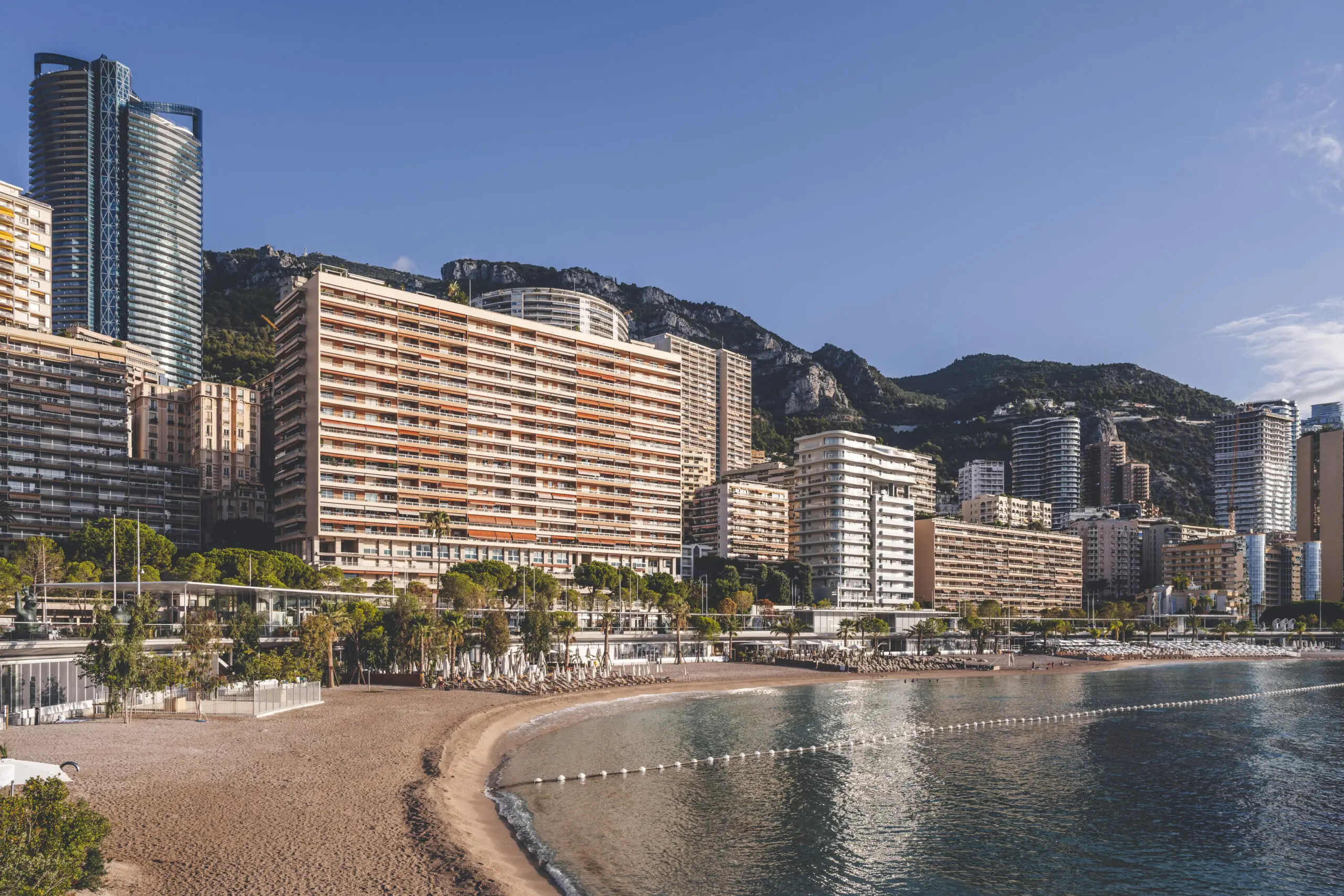

You are considering moving to Monaco from Germany and wish to understand the tax, wealth and family implications before taking the leap? In this guide, we review the Principality’s key advantages, the points to watch on the German side (exit tax, tax residency, German-source income) and the practical steps to a successful relocation (banking, residency, housing, schooling).
Note: this content is for informational purposes only and does not constitute tax or legal advice. To safeguard your situation, have your project validated by a tax adviser in Germany and a qualified adviser in Monaco.
The major advantages of moving to Monaco in 2026
After comparing several options, Monaco attracts numerous international profiles through its lifestyle, stability and specific tax regime. The safest approach is to remain factual: what Monaco does not tax, what Germany may continue to tax, and what depends on your individual situation.
Key indicators (benchmarks)
- Income tax: no personal income tax in the Principality (except in specific circumstances).
- Wealth tax: no wealth tax in the Principality.
- Inheritance tax: 0% in direct lineage (parent-child) and between spouses.
- Quality of life: security, services, international environment.
A tax framework with no income tax or wealth tax
Taxation is often one of the key drivers. Monaco does not levy personal income tax on individuals domiciled in the Principality (with specific cases to be analysed). There is no wealth tax in the Principality either.
The inheritance regime also deserves your attention: transfers in direct lineage and between spouses are taxed at 0%. This is an important benchmark for wealth transmission, to be confirmed according to your family situation and the location of your assets.
Finally, keep one key point in mind: the fact that Monaco does not tax certain income does not automatically mean it is not taxed at source (for example in Germany), nor that Germany waives all taxation if it considers you to remain a German tax resident.

Reassuring political and economic stability
The Principality is perceived as a stable environment, with solid institutions and strong administrative predictability. This stability is one of the elements sought by investors and international families.
Public safety is also a frequently cited point. Without delving into debatable rankings, note the essentials: significant police presence, territorial surveillance and monitoring, and infrastructure designed for a dense population.
Here again, a cautious approach is preferable to a promise: you gain clarity, but your wealth strategy must still be calibrated on a case-by-case basis (income, holdings, timeline, family objectives).
A cosmopolitan environment focused on excellence
Cultural diversity is part of Monaco’s DNA. Infrastructure facilitates international travel (proximity to Nice airport, road and rail networks) and daily life is highly service-oriented (concierge services, multilingual partners, etc.).
Here are some useful logistical benchmarks for your relocation:
- Quick access to European hubs (Nice / Côte d’Azur, northern Italy, Switzerland).
- Ecosystem of private banks, notaries, legal and tax advisers.
- Premium services (international schooling, healthcare, concierge).
Anticipating the German exit tax to protect your wealth
While Monaco’s advantages are clear, leaving Germany requires a structured analysis of German rules, including the exit tax (Wegzugsbesteuerung) and, depending on the case, extended taxation.
How the Wegzugsbesteuerung works and shareholding thresholds
The Wegzugsbesteuerung primarily targets shareholdings in corporations. In simplified terms, it may apply when you transfer your residence abroad and hold a significant stake in a company (commonly cited threshold: from 1% upwards).
Point of caution
The German exit tax may apply upon departure if you hold a stake of 1% or more in a corporation. The principle is based on a deemed disposal and taxation of unrealised capital gains.
Another frequently mentioned benchmark since recent reforms: the observation rule linked to German tax residency (for example, having been subject to unlimited tax liability for a certain number of years within a reference period) must be verified by your adviser.
Finally, the scope of assets concerned is evolving: under certain rules, specific investments may be affected under particular conditions (for example, rules on certain funds/units following recent changes).
Calculating unrealised capital gains and valuing shares
The tax base rests on a fair market value assessment using recognised methods. For unlisted companies, the valuation method can have a very significant impact. Hence the importance of preparing solid documentation and, if necessary, a valuation expert report.
Payment mechanisms (instalment/deferral conditions) may exist depending on your situation and destination, but the exact conditions must be verified: this is a matter to address with a German tax specialist before committing to a major wealth decision.
Organisational strategies before leaving Germany
Depending on your situation, certain actions taken in advance can reduce uncertainty: clarifying holdings, preparing supporting documents, reviewing German-source income, and establishing a coherent departure timeline. Any transaction (gift, disposal, restructuring) must be analysed with your adviser: these matters are technical and highly sensitive.
We can direct you to trusted contacts in Monaco (bank, notary, advisers) to coordinate the Monaco side of your project.
On the “double taxation” front, keep one simple point in mind: the absence of a double taxation agreement on income between Monaco and Germany (in the “DTA” sense) can create friction if Germany considers you to remain a German tax resident. However, cooperation and information exchange agreements on tax matters do exist: this is not the same as a double taxation agreement.
Successfully severing your fiscal ties with Germany
For your expatriation to be recognised, simply “moving” is not enough: your tax residency must actually change, and you must be able to demonstrate this.
Key points to know
In Germany, tax residency is assessed notably through the concepts of domicile (Wohnsitz) and habitual abode. Depending on the circumstances, extended limited tax liability (erweiterte beschränkte Steuerpflicht) may also come into play.
The concept of domicile and habitual abode
Retaining a property “available for use” in Germany can be sufficient to establish a tax link. The most common risk is leaving an ambiguous situation (property, utility bills, keys, availability, etc.).
“Habitual abode” is often discussed in terms of the 183-day rule (more than six months), but in practice, the analysis can be broader: it is better to manage a clear schedule and maintain documentation consistent with your new situation.
Determining and proving the centre of your vital interests
The centre of your interests (family, economic, social) is assessed through a body of evidence: where the family lives, where the main activities take place, where accounts are held and where daily life unfolds.
Examples of commonly used evidence:
- Children’s schooling in the Principality.
- Primary bank account domiciliation and usage.
- Everyday contracts and invoices (housing, utilities, subscriptions).
The idea is not to accumulate random “tickets” but to make your situation coherent and demonstrable.
Extended taxation: a matter to verify on a case-by-case basis
Extended limited tax liability (erweiterte beschränkte Steuerpflicht) is a German mechanism that may apply, subject to conditions, for a period of up to ten years after departure. The exact criteria (nationality, economic ties, German-source income, low-tax country) must be validated by a specialist adviser.
Formalities and criteria for obtaining Monaco residency
Once your project is framed, you need to satisfy Monaco’s administrative requirements to obtain a residence card.
Administrative pathway (benchmarks)
- Opening a bank account and proof of financial resources.
- Criminal record check and civil status documents.
- Proof of housing (suitable purchase or rental).
- Interview with the Sûreté Publique.
- Issuance of the residence card (subject to the application).
Demonstrating financial resources and bank deposit
Monaco requires a bank certificate demonstrating sufficient resources. In practice, a significant deposit is often requested by institutions (a frequently cited order of magnitude is around €500,000, but this varies by bank and profile).
The key point: there is no single “fixed amount”. Your bank assesses your situation and issues the corresponding certificate.
Your choice of private bank in Monaco can facilitate the smooth processing of the application (KYC, source of funds, timelines, contacts).
Character guarantees and housing conditions
A criminal record extract is required. The consistency of the project (resources, housing, family situation) is examined during the process.
Housing must be suitable for the size of the household: this is a point of administrative consistency. A clearly inadequate property type can complicate the application.
Finally, a point often misunderstood: the residence card must be applied for if you wish to reside in Monaco for more than three months per year or establish your residence there. This is not a minimum presence obligation, but a threshold triggering the application process.
Timelines and first residence card
Timelines depend on the completeness of the application and the period. Planning ahead (bank, housing, documents) is the most effective way to avoid bottlenecks.
The first card is generally issued for a limited duration (temporary) and is renewed provided the conditions are met.
Investing in exceptional real estate in the heart of the Principality
Housing is not just a formality: it is also a wealth decision in a scarce market.
Price per square metre analysis by district
Each district has its own logic (residences, views, services, accessibility). In practice, value is driven by micro-location and the specific building.
Demand remains strong for “prime” assets. To move forward efficiently, the right approach is to establish a clear brief: district, services, outdoor space, parking, co-ownership constraints, and timeline.
Focus on the new Mareterra district
Mareterra (Anse du Portier) is a land reclamation extension of approximately six hectares. This recent project strengthens the ultra-prime offering, with very high standards of construction, services and landscaping.
New properties there naturally attract international profiles. Rather than promising “guaranteed capital appreciation”, bear in mind: in such a premium segment, value appreciation will depend on the specific unit, the building, market depth and timing.
Rental and acquisition process
Fees and steps are regulated (notary, registration, agency fees). The essential point is to master the execution: offer, timeline, documents, financing and compliance.
You can browse our prestigious properties to view available opportunities. For certain assets, part of the market remains confidential (“off-market”) depending on the sellers and the type of property.
Quality of life and infrastructure for your family
Beyond wealth considerations, moving to Monaco means organising daily life: school, healthcare, networks, activities and logistics.
Infrastructure (benchmarks)
The International School of Monaco (ISM) offers an international curriculum (IB) and welcomes students of many nationalities. The CHPG is the reference hospital, equipped with high-technology facilities including robotic surgery.
Schooling at the International School of Monaco
The International School of Monaco (ISM) is one of the international institutions sought by expatriate families. The school follows International Baccalaureate (IB) standards and hosts a multicultural community (over 60 nationalities according to public sources).
Places may be limited at certain levels. The best advice remains simple: anticipate the application and synchronise school calendar, housing and residency.
Healthcare system and access to the CHPG
The Centre Hospitalier Princesse Grace (CHPG) is the reference hospital in the Principality. It notably features robotic surgery with Da Vinci robots used across several specialties.
Accessibility and proximity to healthcare services are a reassuring point for families, without however promising the absence of waiting times: this depends on specialties and periods.
Social integration and cultural life
Clubs and circles (according to your interests) can facilitate integration. Cultural life (events, sport, activities, leisure) is rich relative to the territory’s size.
The cost of living is high, but it comes with a high level of services and a well-regulated framework. The objective is to clearly budget the family project from the outset.
Structuring your assets and personalised guidance
To sustain your relocation, organising German-source income and maintaining administrative consistency are critical.
Managing German-source income after departure
German-source income (for example, rental income, certain distributions) may remain taxable in Germany. This is a point to map precisely before departure.
Regarding dividends: Germany generally applies a withholding tax of 25% + 5.5% solidarity surcharge, i.e. 26.375% (excluding any church tax). Without a double taxation agreement on income with Monaco, reduction/credit mechanisms must be studied on a case-by-case basis.
Setting up a business and corporate tax
Establishing a company in the Principality involves a regulated process and a coherent business project. The authorities examine the economic substance of the project.
Corporate tax applies notably to commercial/industrial activities where more than 25% of turnover is generated outside Monaco. The reference rate is 25%. Progressive exemption regimes may exist for genuinely new businesses, subject to conditions.
Substance (premises, organisation, genuine activity) is a central point: a purely “letterbox” structure must be avoided.
The role of the real estate agency as a comprehensive partner
At HOMES, we support you in framing the real estate component (purchase or rental) and coordinating the project (bank, notary, partners). Our objective: to secure each step, reduce grey areas, and align your housing with your residency constraints and family timeline.
To learn more: how to move to Monaco.
In 2026, Monaco remains a sought-after destination, but a successful relocation rests on rigorous preparation: German taxation, Monaco residency, housing, schooling and income organisation. If you wish to move forward, we can frame your project and direct you to the relevant contacts.
FAQ
What are the major tax advantages for a German resident moving to Monaco in 2026?
Monaco does not levy personal income tax on individuals domiciled in the Principality (except in specific circumstances) and has no wealth tax. Inheritance tax is 0% in direct lineage and between spouses. Please note: certain income may remain taxed at source in Germany, and Germany may continue to tax you if it considers you to remain a German tax resident.
How does the German exit tax (Wegzugsbesteuerung) work when moving to Monaco?
The exit tax primarily targets shareholdings in corporations and may apply upon departure if you hold a significant stake (commonly cited threshold: from 1% upwards). It is based on a deemed disposal and taxation of unrealised capital gains. The exact terms (reference period, instalment/deferral conditions) must be validated with a German tax specialist before departure.
What are the financial requirements to obtain a Monaco residence card in 2026?
The residence card application notably requires a bank certificate demonstrating sufficient resources. In practice, a significant deposit is often requested by banks (frequently cited order of magnitude: around €500,000, varying by profile and institution). Consistency between resources, housing and life project is a determining factor.
How can I effectively prove the severance of my fiscal ties with Germany?
The objective is to avoid grey areas: no longer having a property “available for use” in Germany, managing days of presence, and demonstrating a centre of life in Monaco (family, housing, banking, daily life). The exact rules depend on your situation and must be validated by an adviser.
What is the state of the Monaco real estate market and what prices should be expected for 2026?
Monaco is a rare micro-market with very high prices and significant variations between districts, buildings and amenities. Mareterra strengthens the ultra-prime segment and certain units can exceed €100,000/m². The best approach is to define a precise brief and work to a realistic timeline.
Is it possible to set up a business in Monaco while maintaining interests in Germany?
Yes, but it requires rigorous organisation: economic substance in Monaco, understanding of corporate tax (notably the 25% threshold for turnover generated outside Monaco) and mapping of German-source income (withholding taxes, reporting obligations). Bilateral tax advisory support is recommended.